In the Beginning: The Paper That Started It All
Thursday, June 16, 2005
This whole project stemmed from a class assignment when in University (I graduated summer of 2004, and the assignment was at the end of the Winter semester in April 2004). The course I was in was titled "Shakespeare Adaptations." Going into something like this, you start thinking about, "how many adaptations could there possibly be?" or "what classifies as an adaptation?" The answer to the first question is: a helluva lot. The answer to the second: anything that even refers to Shakespeare's characters, plot, etc. Of course, those answers are real brief compared to what I encountered in the 13 weeks of class. Our textbook was actually a collection of modern adaptations and mentioned several more in the back of it. We didn't just deal with theatre pieces, but also poems, short stories, and, of course, film.
For the final assignment, we had two options: 1) write our own Shakespeare adaptation, or 2) compare any two adaptations not mentioned in the course. The first option could be a lot of fun and still challenging, while the second could take eons just to select the two adaptations to compare. I fell into the pit trap of the second one and I should've known better. From the get go, I had it in my mind that I was going to compare two Macbeth plays, because: a) it was a play we never talked about in the class in depth, b) I had a few adaptations at the ready to write about by two of my favourite authors, and c) I'm nuts. Everyone knows what happens when you deal with Macbeth — and if you don't, you're lucky.
The two adaptations I had in mind were a macbeth by Charles Marowitz (playwright, director, critic, worked with Peter Brook in England, formed his own company there, etc. — brilliant man) and Makbeth by Richard Schechner (critic, director of the infamous Performance Group in the late 60s–1980 — which later formed the Wooster Group, sans Schechner — and experimental theatre artist, also a professor at NYU for the past 30–40 years). Two brilliant men, who were both in their 30s when they wrote the plays. Marowitz was in England, Schechner in America, and without knowing it (or maybe knowing it) they both wrote their adaptations within the same year or so of each other. Surely the Vietnam War was on both of their minds when they tackled it, with a strange power lurking in the midst of the US government and drawing them into Vietnam. Neither of them wrote about Vietnam in these two plays, so I wanted to get an idea of what the context was for them writing.
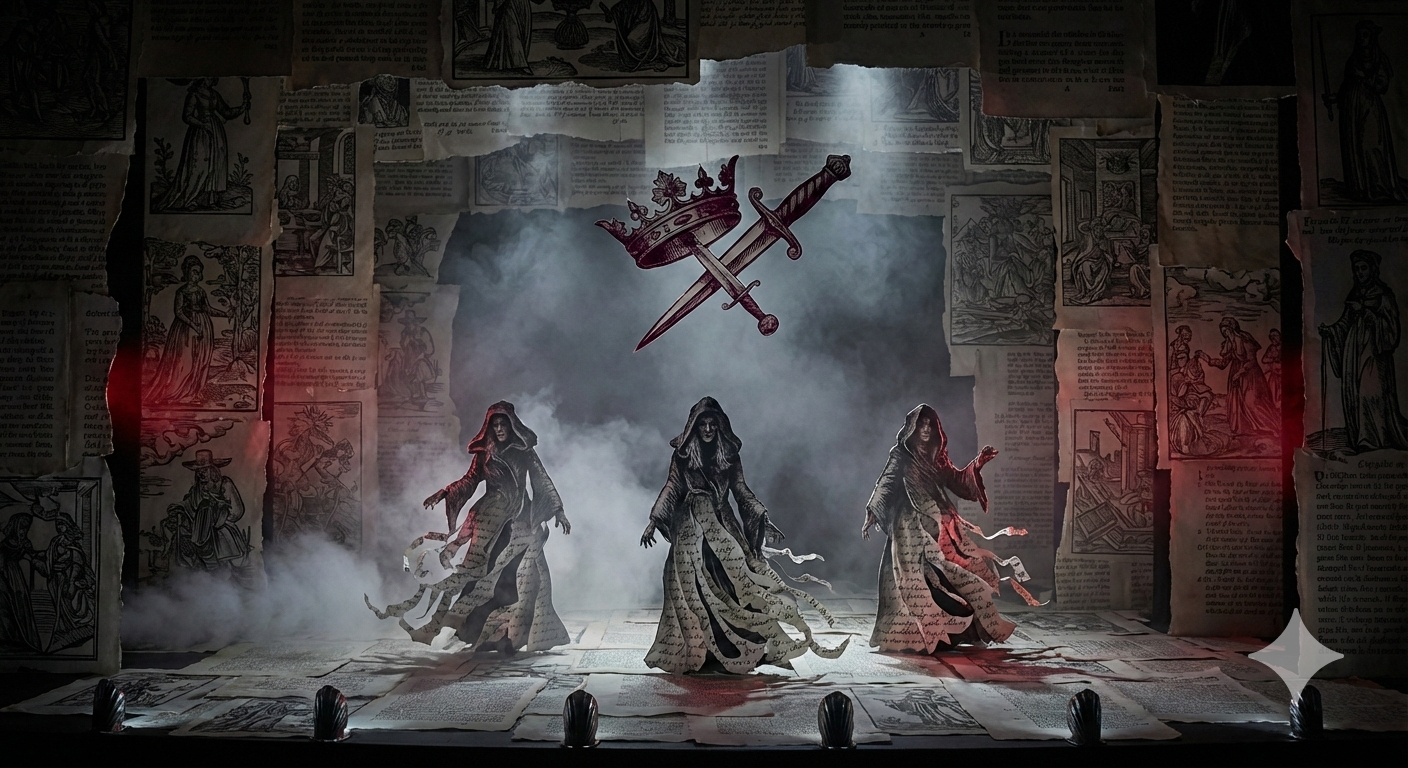
With the two plays in hand, I set off — and tripped during the first few steps. I discovered a third adaptation: Macbett by Eugene Ionesco (one of the great absurdist artists of the 50s and 60s, like Beckett, Genet, and others). What made me trip so hard was the fact that Marowitz had translated Macbett into English (possibly even directed it, but I don't have the sources available to check). There were some strong similarities between their two adaptations, mainly the fact that in both plays, there are three Macbeths. So that set me off down another path, but Schechner's was still heavy in the mind.
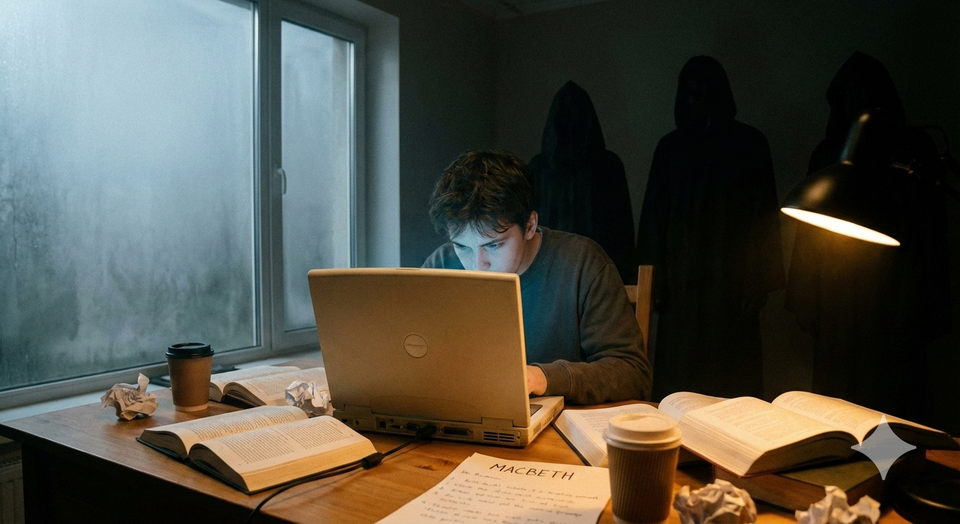
I drowned myself in reading about Marowitz and trying to find anything on Ionesco that talked about his play. I was struggling a lot. It was the last weekend before the paper had to be handed in and presented to the class. I had to work a dance competition (meaning, work from 10am–10pm, three days straight, with a fourth day only going until 5pm) and had a lot of other stress from a few other projects that were failing miserably as well.
During that competition, sometime on Friday night, I stumbled across one quote and then another that made me light up:
Material from earlier theatre can be brought into a production in the same way as personal material is brought in. Just as the performer refines, distorts, condenses, and selects from his life experiences, so fragments from earlier dramas can be worked into the play at hand. Only since the intrusion of stupid laws and notions regarding originality has this rich vein of creativity been stopped. Shakespeare and Moliere without their plagiarisms would be much poorer playwrights. An art that is in essence transformational and transmutational should not surrender any of its sources, its deep springs. The modern idea of originality is a lawyer-capitalist construction geared to protecting private property and promoting money-making. It is anti-creative, and inhibits the reworking of old themes in the light of new experience. It is the constant reworking and elaboration of old material — call it plagiarism if you like — that is the strongest sinew of tradition.
— Richard Schechner
and
...what's essential in the better works of William Shakespeare is a kind of imagery-cum-mythology which has separated itself from the written word and can be dealt with by artists in isolation from the plays that gave it birth. And, by insisting on the preservation of the Shakespearian language, as if the greatness of the plays were memorialized only there, the theatre is denying itself a whole slew of new experiences and new artefacts which can be spawned from the original sources, in exactly the same way that Shakespeare spawned his works from Holinshed, Boccaccio, Kyd, and Belleforest. The future of Shakespearian production lies in abandoning the written works of William Shakespeare and devising new works which are tangential to them, and the stronger and more obsessive the Shakespeare Establishment becomes, the more it will hold back the flow of new dramatic possibilities which transcend what we call, with a deplorable anal-retentiveness, the canon.
— Charles Marowitz
The talk of transforming a piece and transcending the original brought up reminders of an aspect of Richard Schechner's environmental theatre, which he called the shaman. The idea of the shaman lined up real well with something else that is prominent in Macbeth: the witches. Marowitz also said in his introduction to his play, "the tragedy of Macbeth lies not in his fate, but in his state." I started to put the links together and the paper started to develop in my mind. That night, instead of just crashing at home, I stayed up for a while and sketched things out on paper. The next day, I was researching, note taking, writing a few paragraphs here and there on my laptop. Sunday night, I finished the paper and printed it out Monday morning in time for the class. The title of it was: The Weird Sisters and Dark Powers: Metaphysical Aid in Two Adaptations.
Now, having finished the paper, I started getting excited about doing my own adaptation of Macbeth. I'm not sure what I was thinking, but I explained it to my friend Maki in the hallway one day. She was excited. I shared my paper with her and then she told another of our friends, David, about it. Two or three meetings later, I had an idea of what we were all trying to accomplish and took the task of actually writing the adaptation.
And that's how this whole thing really began.
 James McCullough